Friday, 16 September 2011

Oare Marshes

First off thank you to Phil for identifying the Migrant Hawker in the last post, I am still a complete novice when it comes to insects. I am also having grave difficulty posting comments on blogger.com as my ID is never recognised!!! Anyway onto this post.
On Wednesday Alan and I took a quick trip down to Oare Marshes, it was a nice sunny day, sadly we got there just a little too late (11.30am) to watch the tide come in. Overlooking the Estuary there were some 30 Ringed Plovers on the remaining foreshore and a young Knot hiding among the sand ridges, whilst there a Wheatear perched on the gate and fence quite close to us.
Wheatear - Canon 400D + 100-400mm

We walked west along the shore path hoping to pick up a few birds on the remaining shore, however other than a few Black Headed gulls there were just two Godwits. One had a distinctive upcurve to the bill, but I missed them take off so cannot confirm a Bar Tail. On the land side of the path there was a group of about 500 Starlings which were frequently swirling around in a sort of mini moot.
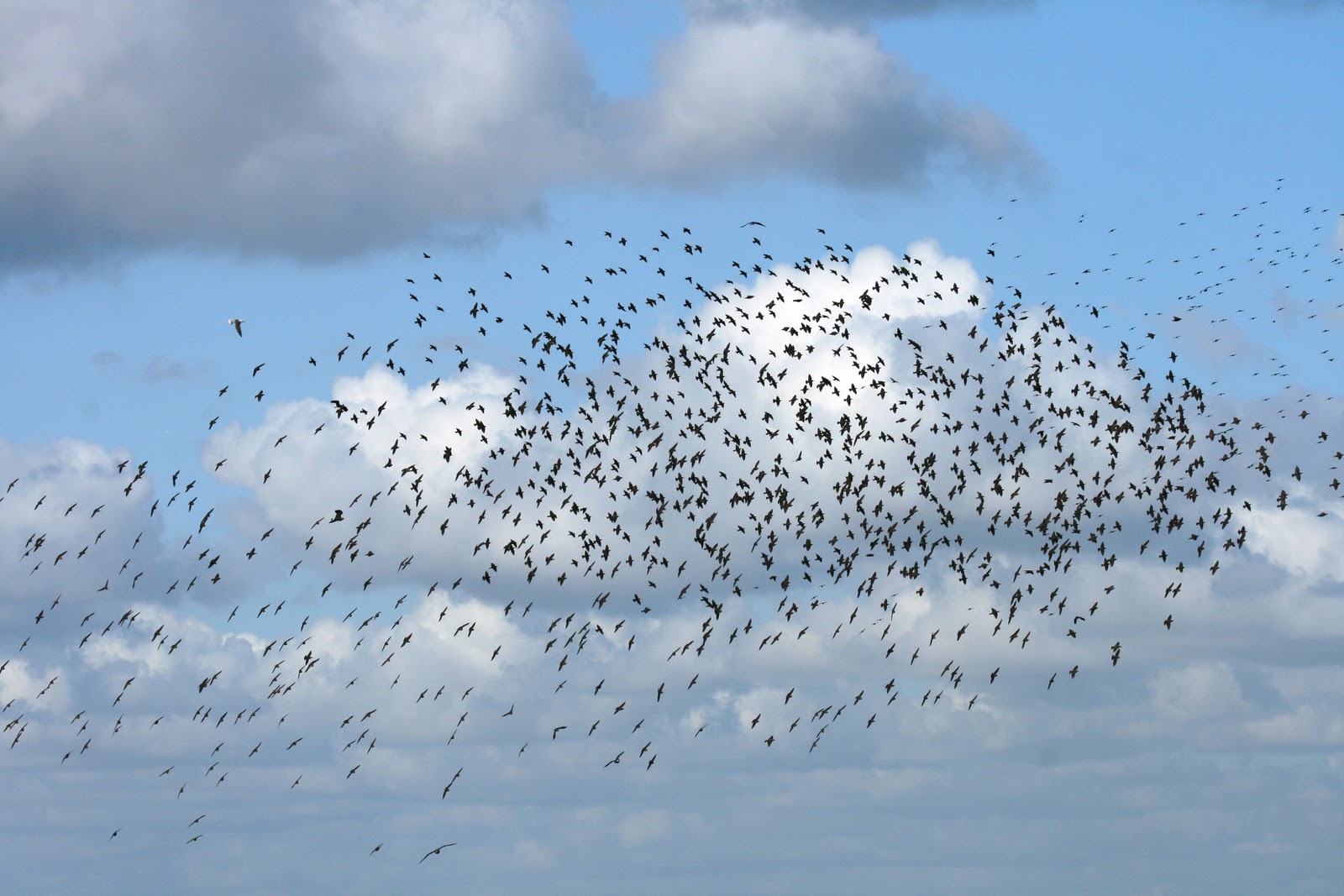
Starlings - Canon 400D + 100-400mm
There was nothing in the Estuary or the creek other than a few Black Headed Gulls, on the flood side of the path there was a Heron in the reeds and the a few Teal on the bank near the Estuary hide. Further along the path, views over the East flood gave sightings of Black Tailed Godwits, a Dabchick, Lapwings, Herring Gulls, Mallards, a couple of Greylag Geese and some Coots.
Teal and Lapwing (from road) - Canon 400D + 100-400mm
We passed the sluice gate walking towards the East Flood hide, a Whitethroat called from the bushes but didn’t show, a Willow Warbler and Robin were also heard from the bushes and both briefly seen. A silent Reed Warbler flew between two sets of Reeds, and several Common Darters and Small Whites flew about us. The path also gave the best views of the hundreds of Black Tailed Godwits on the Eastern flood along with a number of Redshank. From the East Flood hide we picked out a few Golden Plover, there were plenty of Cormorants on show and a large number of Avocets feeding. In the bushes in front of us a small flock of Goldfinches was flitting about, the one on the left of this photo was a juvenile still being fed by an adult.
Goldfinches - Canon 400D + 100-400mm
Back on to the road, I was following a Heron in flight with my binoculars when in the background I saw a Buzzard, it was so high that it was invisible to the naked eye. We went across to the West Flood hide, however there was only one bird there but it was a Greenshank so we watched it for 5 minutes before it went from view. Too many intervening reeds for a decent photo.
Walking back to the Car Park, the East Flood showed more of the same, however we did get closer views of a Little Egret and a Ruff (see below), someone on the road spotted a Water rail, but sadly not us. A lonely House Sparrow flew past as did a solitary Red Admiral.
Little Egret - Canon 400D + 100-400mm

Ruff - Canon 400D + 100-400mm
Not seen at Oare, but on the roads up to the site were a Pheasant, Carrion Crow, Wood Pigeon, Magpie and Collared Dove. Not a long species list (33 + 1 heard), but more than made up for by the volume of birds.

Tuesday, 13 September 2011

Cliffe Pools


Sunday I took a trip to Cliffe Pools, it was a gusty but bright day. I started off with a look over the pool by the car park  which contained mainly coot, however around  the far edges were some Mallards, Pochards, Tufted Ducks, Great Crested Grebes and a Dabchick, also standing around on the  western shore with a few Lapwing were well over a hundred Redshank.
Great Crested Grebe & Black Headed Gull - Canon 400D + 100-400mm
I then went on to Radar Pool and turned left to walk along its southern shore, there was not a lot of activity on the pool except a small flotilla of 20+ dabchicks which was nice to see. The path itself was a different matter, a flock of Goldfinches flew overhead, followed a little while later by a mixed flock of waders and then a moment later a flock of Redshanks, I would like to think that there were a couple of Spotted Redshank amongst them, though that could just be their flight angle slewing the white rumps, check out the one near top RH corner.
Redshank in flight - Canon 400D + 100-400mm
The path to Flamingo Pool was alive with butterflies, mainly Small Whites and Red Admirals, a solitary Meadow Brown showed itself as did a couple of Commas, Dragonflies were also plentiful with positive identification on Common Darter and Migrant Hawker Dragonflies, there were others but they were too fast for identification.

Common Darter - Canon 400D + 100-400mm

Migrant Hawker - Canon 400D + 100-400mm
Flamingo Pool was initially quiet however as I walked around to the Western side a couple of flocks of waders flew in and seemed to line up in the water. At the far right were Grey Plover in a variety of plumages with a couple still in full summer, then there were Black Tailed Godwits, followed by Dunlin and Curlew Sandpipers, whilst on the shore were Ringed Plovers, and a number of Little Egrets. I have to thank the RSPB warden who was there for helping me to pick out the Curlew Sandpipers. Whilst we stood sheltering from the buffeting wind behind his truck, Avocets started to fly in from the Thames and started to feed, in all about 300 of them. Sadly all in Flamingo pool were just too far away to photograph properly.
Black Tailed Godwits (over Radar Pool) - Canon 400D + 100-400mm

I returned to the car park via the same route still marvelling at the number of butterflies and dragonflies and at the junction of Flamingo Pool and Radar I found some Small Heaths flitting about.
Small Heath -- Canon 400D + 100-400mm

From the path viewing point over Radar pool I watched some roosting gulls on the northern shore. Black Headed Gulls were mixed with Great Black Backed Gulls, Shellduck and a couple of Herring Gulls, there was also a Lesser Black Backed Gull being pestered for food from a youngster. Wandering amongst these were some Starlings and a Pied Wagtail, whilst swimming past on the pool were three Wigeon.
Red Admiral - Canon 400D + 100-400mm

Small White - Canon 400D + 100-400mm
Red Admirals - Canon 400D + 100-400mm
The last sightings of the day were a flock of Long Tailed Tits with a few Blue Tits among them. Other spots for the day included Carrion Crow, Chaffinch, Oystercatcher, Swallow and Wood Pigeon. Heard but not seen was a Pheasant, a Robin and some Magpies. The day list was 32, not bad for me at Cliffe, sadly I did not get to see the Little Stint or Ruff that were there that day, maybe next time.
If there are any misidentifications please let me know, I am a complete novice with Dragonflies and Butterflies. Please also the post below. Painkillers are working so 2 posts today.
  

Dungeness

A bit of time since my last post due to my hands, unfortunately they still cannot cope with too much typing. Trying to edit the pictures gives me the most pain, this is mainly RSI as opposed to the Carpal Tunnel which I also have. I am experimenting with different mouses to see if it helps.
Anyway onto this brief report, last Monday (5/9/11) Alan and I went to Dungeness RSPB where the high winds seemed to keep everything smaller than a Lapwing hidden in cover, that is with the exception of the Great Tits on the feeder in the car park. The high winds also put paid to photography, the continual buffeting made telescope work equally difficult, fortunately Dungeness has a large number of hides. 
Great White Egret - Canon 400D + 100-400mm + X2 extension hand focussed
The day started well with the first four hides revealing Cormorants, Mallard, Lapwing, Teal, Tufted Duck, Pochard, Starling, Common Sandpiper, Coots galore, whilst Swallows flew overhead. On the walks between the hides we saw Magpies, Carrion Crows, Great Black Backed Gulls, Wood Pigeon and a distant Marsh Harrier.
Christmas Dell hide was quiet except for a few Sand martins.
Great White Egret and Little Egret - Canon 400D + 100-400mm
Denge Marsh hide gave the first 2 new sightings for the year with Great White Egret showing well until it was chased off by a Heron. The second was a Hobby flying low over the hide. Others seen from here were Teal, Gadwall, Greylag Geese and Mute Swans, Great Crested Grebe and Common Tern. At Denge I took the only photographs of the trip.

Great White Egret pounced upon by Heron - Canon 400D + 100-400mm
Great White Egret keeps face walking past the antagonist - Canon 400D + 100-400mm

Great White Egret disgruntled strides off - Canon 400D + 100-400mm

Hanson ARC Hide gave another three year firsts, Black Terns were in the far distance, whilst closer on the islands near the hide were Sandwich Terns, Golden Plover, Ringed Plover, a solitary Oystercatcher, Dunlin, whilst a Garganey was among some Shovelers. A Sparrowhawk also flew over whilst we were there.
We missed the Cattle Egret, however despite lack of photos and smaller birds it was a nice day with 34 species.

Saturday, 16 July 2011

Elmley Marshes

Sorry for lack of posts, this has been mainly due to carpal tunnel syndrome (in both hands). Anyway on to this report. 

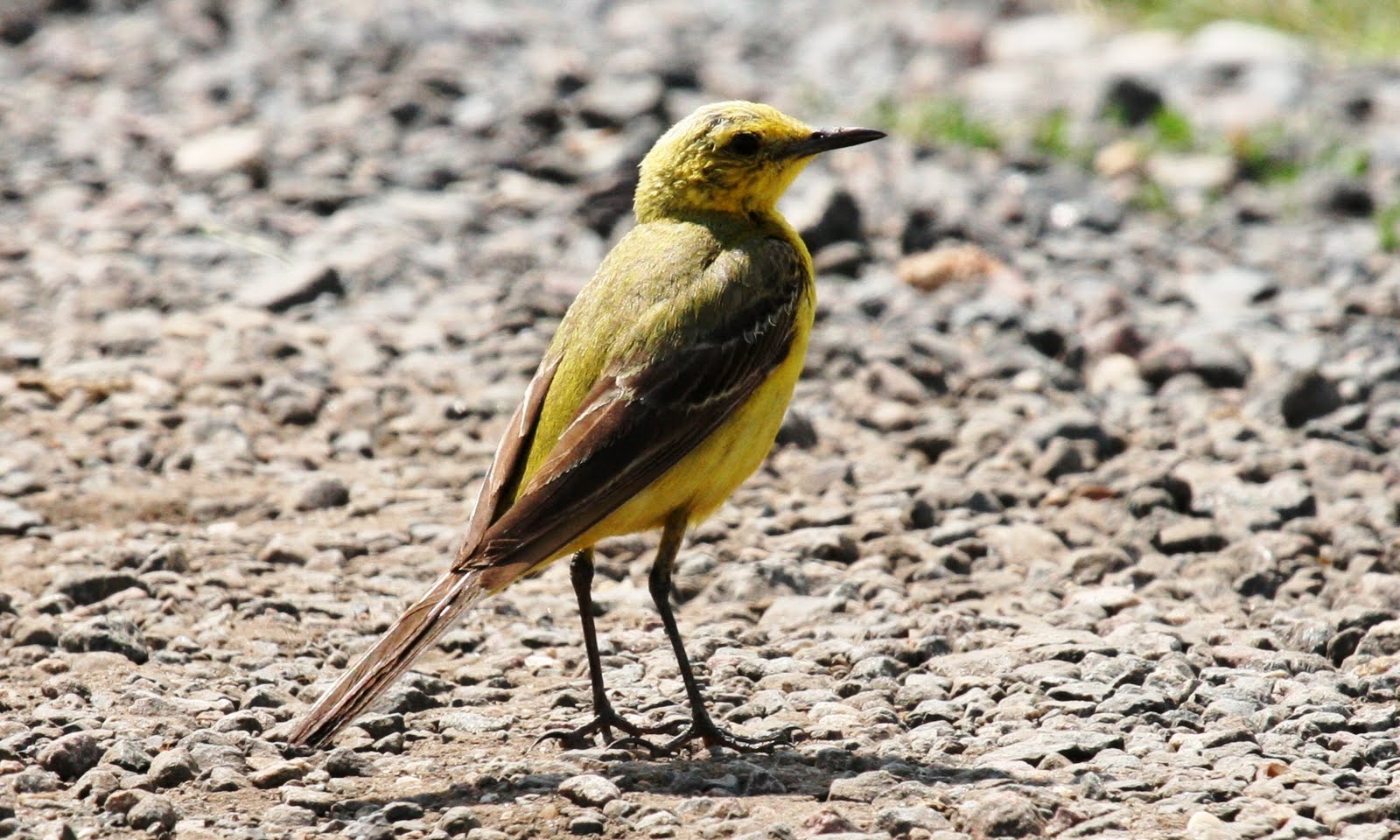
Yesterday with bright sunshine I went to Elmley Marshes RSPB Reserve hoping to see the Long Eared Owls (for which there is a sign) and the Humming-Bird Hawk-Moth which had been seen there by friends of mine. As always a short note about the venue, Elmley Marshes is off the A249 and clearly signposted from a junction just before the bridge to Sheppey. Facilities include a car park for about 20 cars and a toilet. There is a 2 mile drive through the reserve to the car park which is usually quite fruitful, but it is forbidden to exit your car on the drive, though you are welcome to stop and use your car as a hide. Dogs are not allowed on the reserve. Yesterday I only used my Canon 400D + 100-400mm Lens.On the drive to the car park I saw Lapwings, Starlings, House Sparrows, Yellow Wagtails, a Sky Lark, a Little Egret, a Marsh Harrier, and a Heron whilst Swallows, Pied Wagtails and Moorhens awaited me in the car park.


Yellow Wagtail on drive
A look over the first lake from the toilet block gave Coots, BH Gulls, Oystercatchers, a Dabchick, a Green Sandpiper, a Great Crested Grebe, and some more Lapwings and Yellow Wagtails. Still on the farm by the Orchard I found the sign for the Long Eared Owls, but they were a no-show, however whilst there I did get to see a single Humming-Bird Hawk-Moth, sadly it did not hang around, unlike the Small Whites, Green Veined Whites, Gatekeepers and Red Admirals. 

Red Admiral

Gatekeeper

The lake at the bottom of the hill had a very low water level and the only addition to the list was a couple of Redshanks and Avocets, whilst the walk to the Wellmarsh Hide provided a few sightings of Sedge Warblers and a Reed Warbler (though I only saw its back), some Mallards and a large number of Meadow Browns and Small Skippers. 
Small Skipper

From Wellmarsh Hide could be seen Avocets, Black Tailed Godwits, a Wigeon family (which had me foxed for ages due to very odd plumage all round), singletons of Spotted Redshank, Ringed Plover, Ruff and Common Tern. With the exception of the Avocets, they were all at the far end of the Lake so not photographable. Fortunately I had one poser with which I went click happy (100 plus photos), what surprised me was it looked so young and yet there were no adults caring for it, do the adult Avocets abandon their young so soon?


Young Avocet
Counterwall Hide had a Common Sandpiper, another Ruff and some more Avocets, whilst distant scans with the scope picked out Turnstone, Shelduck, Greylag and Canadian Geese, also a Buzzard which was gliding into the stiff breeze to remain almost stationary.


Ruff
The return to Wellmarsh Hide revealed some Reed Buntings (which I had heard but not seen earlier) and a Sedge Warbler who appeared to take my clicking shutter for a potential mate. With every click, he gave a verbal response and edged nearer with his "bug" offering. I eventually had to turn him down.


Sedge Warbler with gift
The trek back to the Car Park gave mainly butterflies, though the wind was too strong for photographing them, I added a solitary Peacock to the butterfly list. I also found what I believe is a Red-Veined Darter.

(I believe) a Red Veined Darter
One last look at the lake behind the toilets revealed a Wood Sandpiper, whilst opposite the orchard I found another youngster ambling along.

A young Hedgehog
Despite not seeing the Spoonbills or Owls it was an excellent day for me, 46 birds (missed from report are Carrion Crow, Wood Pigeon, Blackbird, Goldfinch, Sand Martin, Mute Swan, Dunnock, Tufted Duck, Collared Dove and Meadow Pipit), a large number of butterflies and dragonflies (missed from report is Common Blue Damselfly) and a young hedgehog.   
 

Saturday, 2 July 2011

Hemsted Forest


I was initially attracted to drive out to Hemsted Forest by a bird list which I had seen on KOS that had a number of species on it which I had not seen yet this year, secondly I had never been there before and it reached out to my exploring nature, so off I went arriving about .  Hemsted Forest is situated in West Kent, not too far from Sissinghurst, the Public car Park of which is at the South end of the Forest near Benenden. The facilities are limited to a smallish car park, probably take about 30 cars maximum and that’s about it, though the main paths are well marked being about 10 feet wide and made of packed earth and rock. From the car park I made my way along the main route and in a short space of time came across some Comma’s who were, despite the coolish weather, reluctant to settle.


Comma - Polygonia c-album - Canon 400D +100-400mm

After a while I turned right down a side track to take me deeper into the forest which is where I came across some what I believe to be Meadow Browns and a Ringlet, the former refusing to stop still with wings open and the second refusing to stop with its wings closed! They were more active than the Comma’s!
(I believe a) Meadow Brown - Maniola jurtina - Canon 400D +100-400mm

(I believe a) Ringlet - Aphantopus hyperantus - Canon 400D +100-400mm

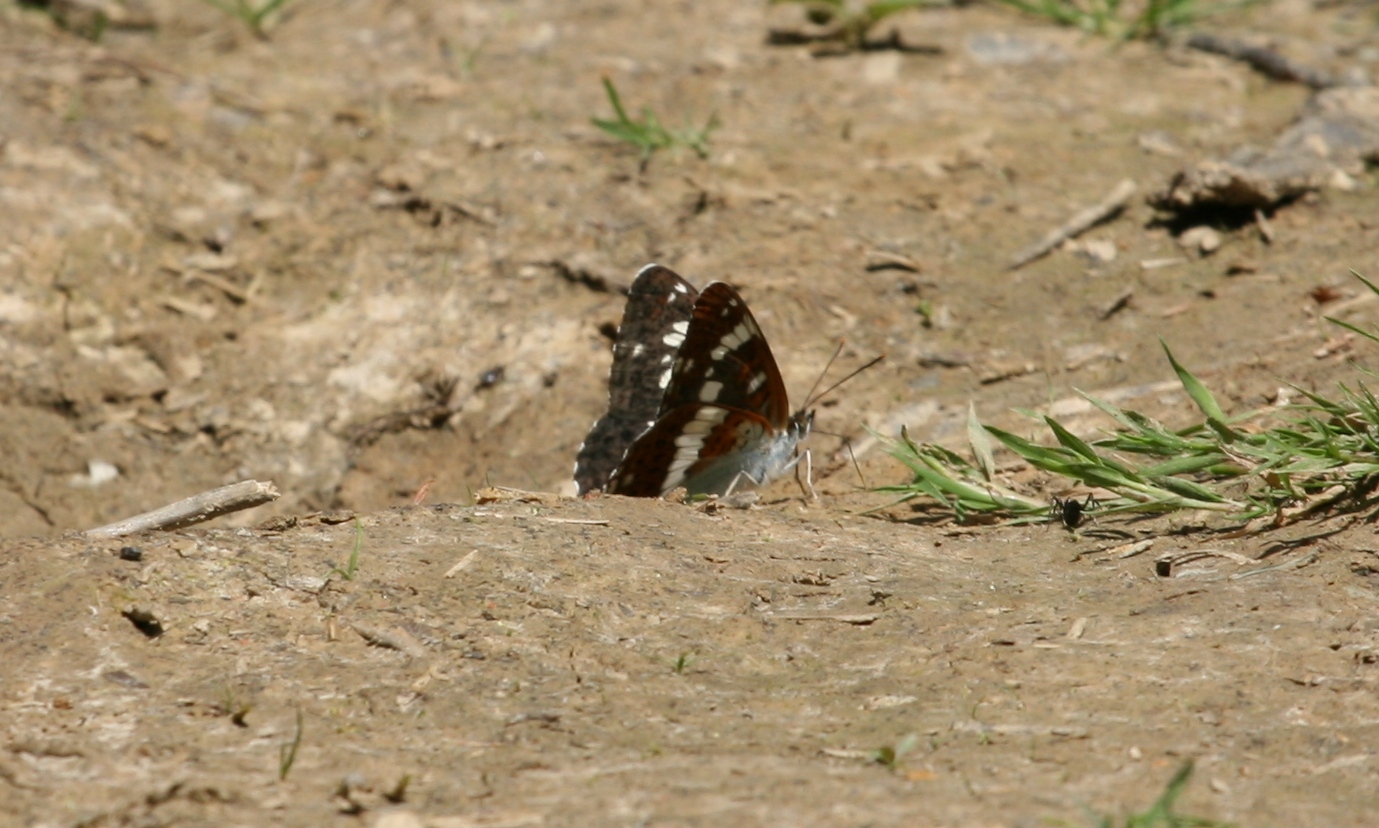
Another couple of left turns brought me out onto a slightly wider path where I found some White Admirals, a butterfly I had never seen before.

White Admiral - Limenitis Camilla - Canon 400D +100-400mm
Well what about the birds? Amazingly I only saw a Robin, a couple of Carrion Crows and a Wren. There was some Tits calling from the upper canopy deep in the woods that I never saw, and occasionally the odd call from the depths of the Forest, but nothing near me and nothing that I recognised (must practice more with bird calls). Perhaps it was the time of day, perhaps the time of year, or perhaps the gallon of insect repellent I had sprayed myself with. There was more to see though. It was after I realised that I was lost that I came across this chap, a Common Toad I believe.

A Common Toad - Canon 400D + 100-400mm

I decided to expand my new interest in Flora, first there was a small group of Foxgloves near where the Toad was seen, then a little further on this white flower stood out from all the surrounding greenery. I have identified it as a White Musk Mallow, please correct me (as with all my identifications) if I am wrong.

A White Musk Mallow - Canon 400D + 100-400mm


A White Musk Mallow - Olympus SP590UZ

Thankfully I came across someone walking their dog who pointed me in the right direction which took me past a glade where two Southern Hawkers were, however they were constantly on the move and I was unable to get a picture. Despite my bird count of 3 (how embarrassing is that?) I enjoyed the walk and intend to return for an evening stroll soon and perhaps catch a bit more bird activity.

Tuesday, 28 June 2011

Blean Woods

 
I know very little about Butterflies other than what I learnt as an infant, which was to know 4 types of Butterfly, namely “a Cabbage White”, “a Red Admiral”, “a Peacock” and “ it’s another type of Butterfly”. With the bird activity dropping off I decided to take advantage of “A Heath Fritillary Walk” arranged by the RSPB at Blean Woods last Sunday. A gentleman by the name of Michael was the lead on this and before we set off he explained that the Heath Fritillary’s were early this year, so the walk was to be more of a general Butterfly walk, this was all the better for me. The weather was very hot and sunny, better than the rain earlier in the week but it did mean that most Butterflies were constantly on the move. This together with the shade of overhanging trees cutting the light level, made decent photography quite difficult (and that’s my excuse for the blurry shots such as this open wing shot of a Heath Fritillary).

Melitaea athalia - Heath Fritillary

  - Canon 400D + 100-400mm
Michael fairly quickly showed that he knew his stuff, at the very first glade he was pointing out butterflies faster than I could keep up with. Within a few moments a Red Admiral, some Ringlets, a coupe of Small Skippers and a Large White had gone past, but other than the Red Admiral and a Ringlet I didn’t get a decent look at any of them and only this Ringlet waited around for their photo to be taken.
  

Aphantopus hyperantus - Ringlet

  - Olympus SP590UZ
 After the first glade we went on a bit of a trek, eventually turning onto an old Bridle path where I was introduced to the Common Spotted Orchid. I cannot remember having seen this plant before though I must have.

Dactylorhiza fuchsii - Common Spotted Orchid

  - Olympus SP590UZ
 A bit further down the path we were shown Cow-Wheat, another plant unknown to me, but significant for the Heath Fritillary as its eggs are laid on the underside of its leaves. Then we found some mating Heath Fritillaries who were happy to sit still for camera; unlike the grass stem they were on and the intervening grass which was whipping around in the stiff, breeze.

Melitaea athalia - Heath Fritillary

  - Canon 400D + 100-400mm

Melitaea athalia - Heath Fritillary (a 3rd one tries to interfere)

  - Canon 400D + 100-400mm
The bridle path had a fair few butterflies along the route, the main three being Heath Fritillaries, Small Skippers and Ringlets, also a Common Blue fluttered past. There were a few moths keeping mainly to the trees and a huge insect with a flash of orange on it, it was about 4cm long, possibly a Hornet or a Humming-Bird Hawk Moth, sadly my photos just show a blur as it was on the move all the time and was about 20 feet away. Throughout the walk Michael had been explaining about the various butterflies found at Blean, their life cycles and how they cope with adverse weather conditions. Michael was both informative and interesting and I really appreciate what he did.

Melitaea athalia - Heath Fritillary

  - Canon 400D + 100-400mm

Melitaea athalia - Heath Fritillary

  - Canon 400D + 100-400mm


 There was not much bird activity, the usual Tits and Willow Warblers were heard as was a Pheasant and a Green Woodpecker, but as I was trying to concentrate on learning about Butterflies the only positive sightings I made were some Long Tailed Tits, a Jay and a Green Woodpecker. Later at home I read up on the Heath Fritillary in my 1986 Readers Digest and was surprised at its rarity, Blean Woods being shown as one of only 3 places it could be found.  

Aphantopus hyperantus - Ringlet

  - Canon 400D + 100-400mm

Thymelicus sylvestris - Small Skipper

  - Canon 400D + 100-400mm
Home was also the place for the final photo of the day, an Orange Moth f. corylaria which flew into the kitchen, Wendy reunited it with the outside world via a blue beaker (2nd shot).

1924 Orange Moth Angerona prunaria f. corylaria

  - Olympus SP590UZ

Orange Moth - clearer shot of Antennae

  - Olympus SP590UZ